
How to Store Your Knives
There are a variety of options for keeping your knives handy and protected. Here we look at the pros and cons of some of the most common methods.
In a drawer
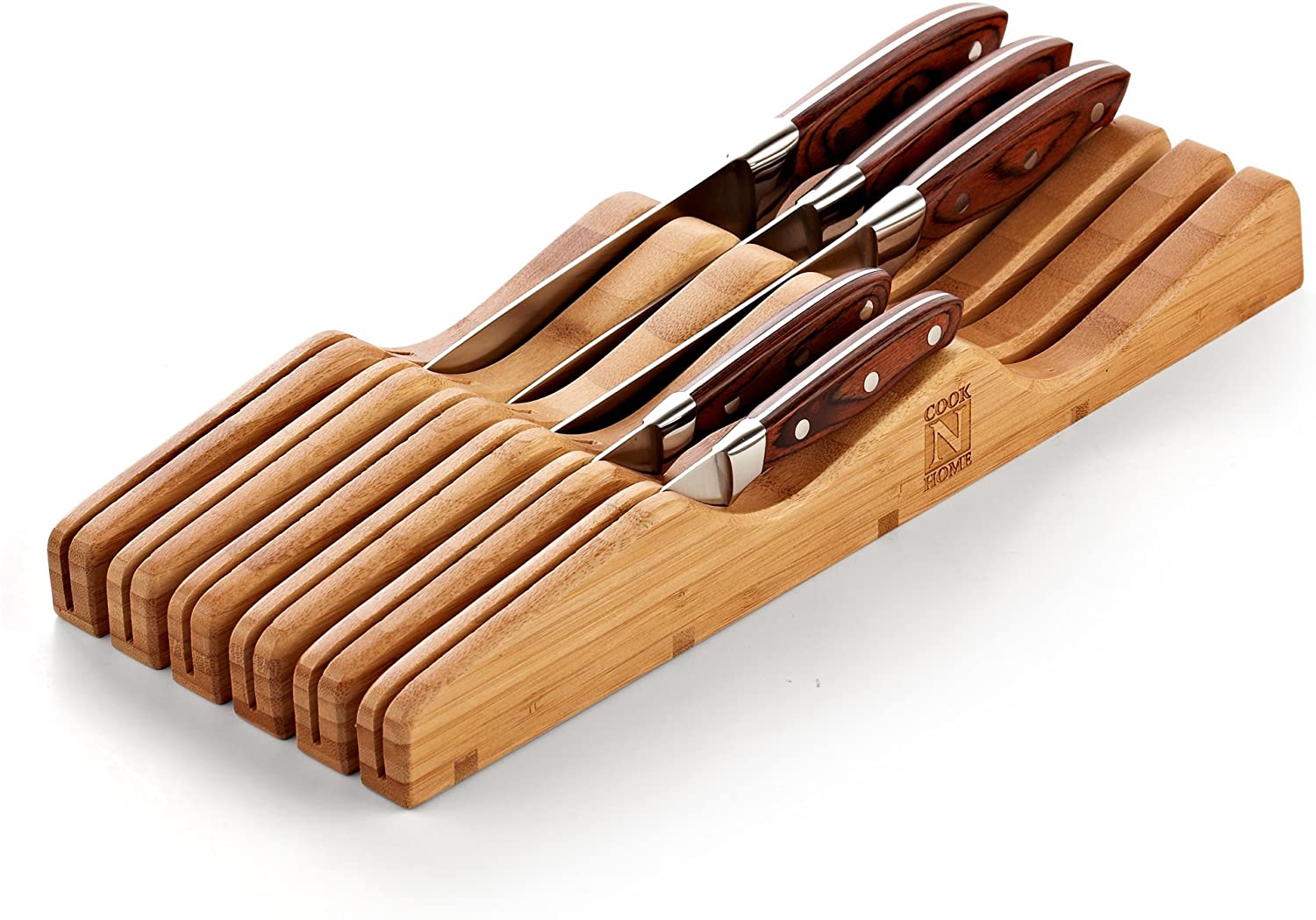
Keeping knives in a shallow drawer can be a great option for several reasons. If you have a small kitchen where countertop space is at a premium, you might prefer to keep them in a drawer. If your knives aren’t particularly attractive, or if your interior design aesthetic tilts towards minimalist, you might want your knives tucked away. The main downside to keeping them in a drawer is that they aren’t quite as accessible. For instance, we prefer to keep our most-used knives at arm’s reach. If you go this route, make sure you have a drawer insert designed for knives. If your knives are rattling around in a drawer, they won’t stay sharp for long.
Pros
-
Frees up valuable countertop space
-
Good option if your knives aren’t a good match for your kitchen decor
Cons:
-
Not as accessible
-
Unusually shaped knives, and those that are extra long or tall, might not fit
In a knife block
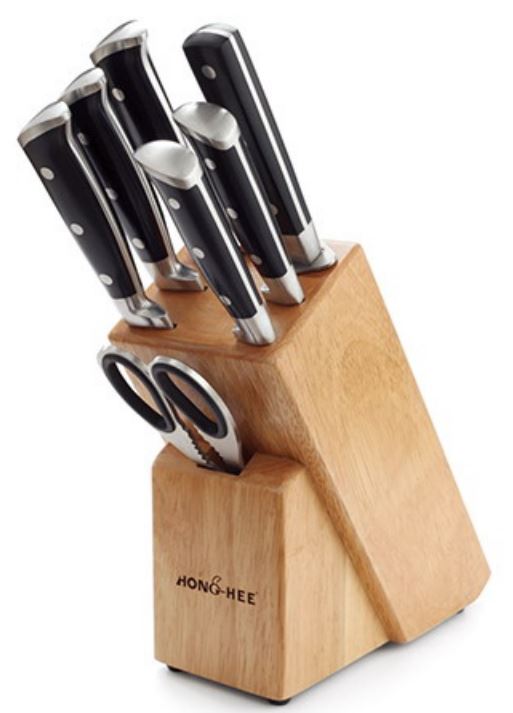
Many people purchase their knives in a set that comes with a big wooden block. These blocks are nice because they are designed for that specific set, and they do a good job of protecting the cutting edges.
But there are a few downsides to a knife block. For one, they are typically pretty large and take up a lot of room on a countertop. Do you really need 10-15 different knives permanently arranged on your kitchen counter? IF you are like us, you only 3-4 of them on a consistent basis. The narrow slots can also be hard to keep clean, so if you are a germophobe, you may not appreciate all the dark nooks and crannies where bacteria can hang out.
Pros
-
Storage for a large number of knives
-
Good at protecting the cutting edges
Cons:
-
Bulky permanent presence on your countertop
-
Not usually the best option for a more curated knife collection
-
Does everyone put the knife back in exactly the right slot, or does it take a couple of tries to pull the right one?
-
What’s living in those slots?
On the Wall
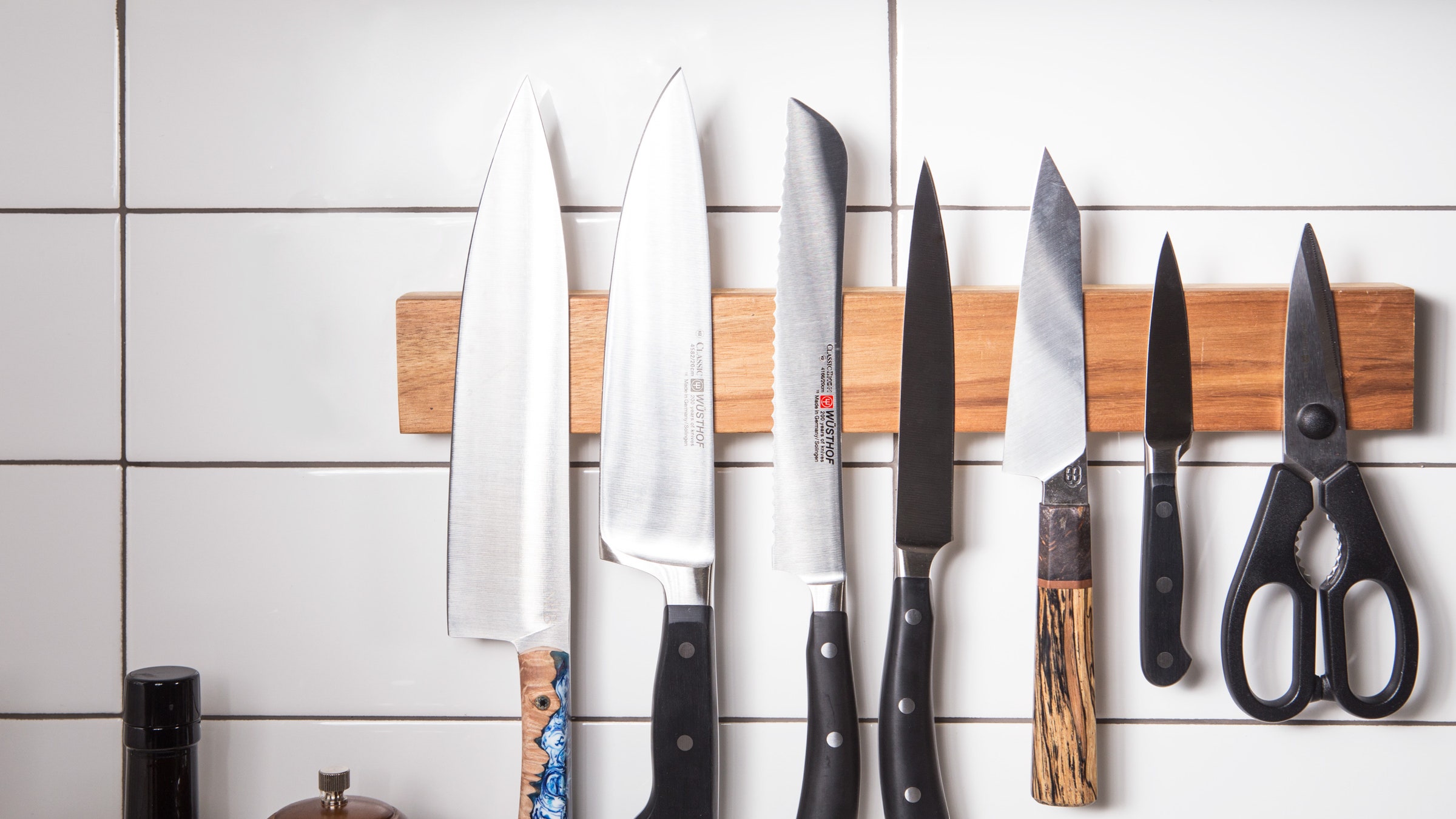
A magnetic strip attached to a wall has several benefits. Knives are easily accessible and the blades are well protected. It’s also nice to be able to rinse your knife in the sink and let it air dry. These strips can accommodate any combination of knife types, which can be a problem for drawer inserts or blocks. The biggest downside is that they require wall space, which is often consumed by wall-hung cabinets and can be even more scarce than drawer or countertop space. Finally, these magnetic strips make your knives part of your kitchen décor, which can be a plus or a minus.
Pros
-
Handy: knives are always at arm’s length and it is easy to see which one you are grabbing
-
Good for the knives because it keeps the cutting edges protected
-
Knives can be put away damp and air dry
-
Puts your knives on display, which could be a good thing
Cons:
-
Requires wall space, which is often at a premium in the kitchen
-
Puts your knives on display, which could be a bad thing
Magnetic Block
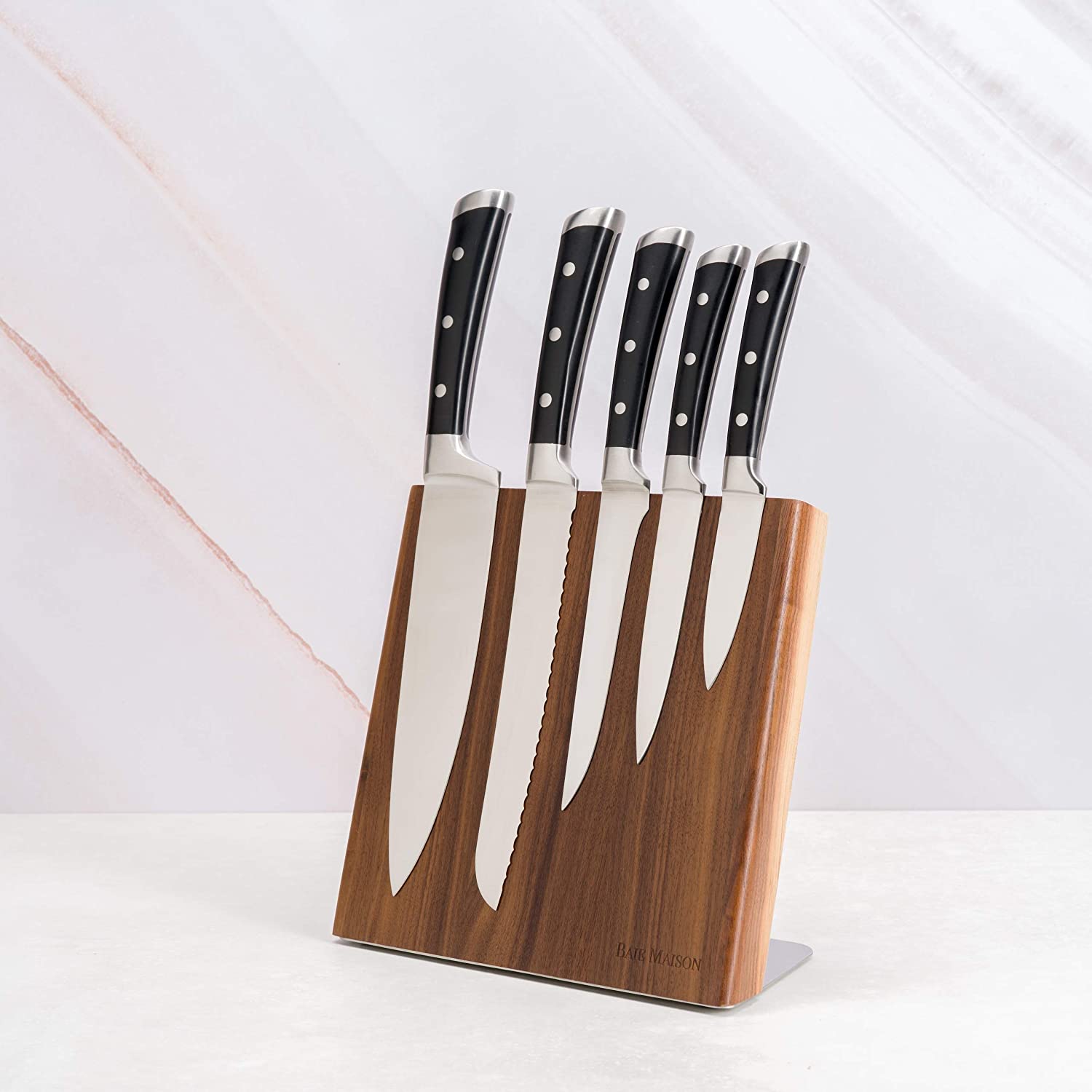
Our favorite way to store knives is on a magnetic block. These holders combine the best features of a traditional knife block and a magnetic strip, but avoid some of the downsides. They are ideal for keeping a small number of your most-used knives at arm’s reach.
Pros
-
Most used knives are always within reach
-
Easy to identify which knife you are grabbing
-
Good for protecting the cutting edges
-
Knives can be put away damp and air dry
-
Requires a minimum of countertop space
-
Puts your knives on display, which could be a good thing
Cons:
-
Holds a smaller number of knives than a traditional knife block
-
Takes up counter space
-
Puts your knives on display, which could be a bad thing
A combination of the above
Who says you have to pick just one? Our best advice is to use a small magnetic block on your counter or a small magnetic strip on a wall (depending on whether you have more countertop space or wall space) for three or four of your most used knives. Then buy a drawer insert to stash the rest of your specialty knives that you may only need a couple of times per month. This setup keeps all of your knives protected, your frequently-used knives handy, and used the minimum of real estate to get it done.