
Types of Kitchen Knives
A guide to the most common knives found in a kitchen.
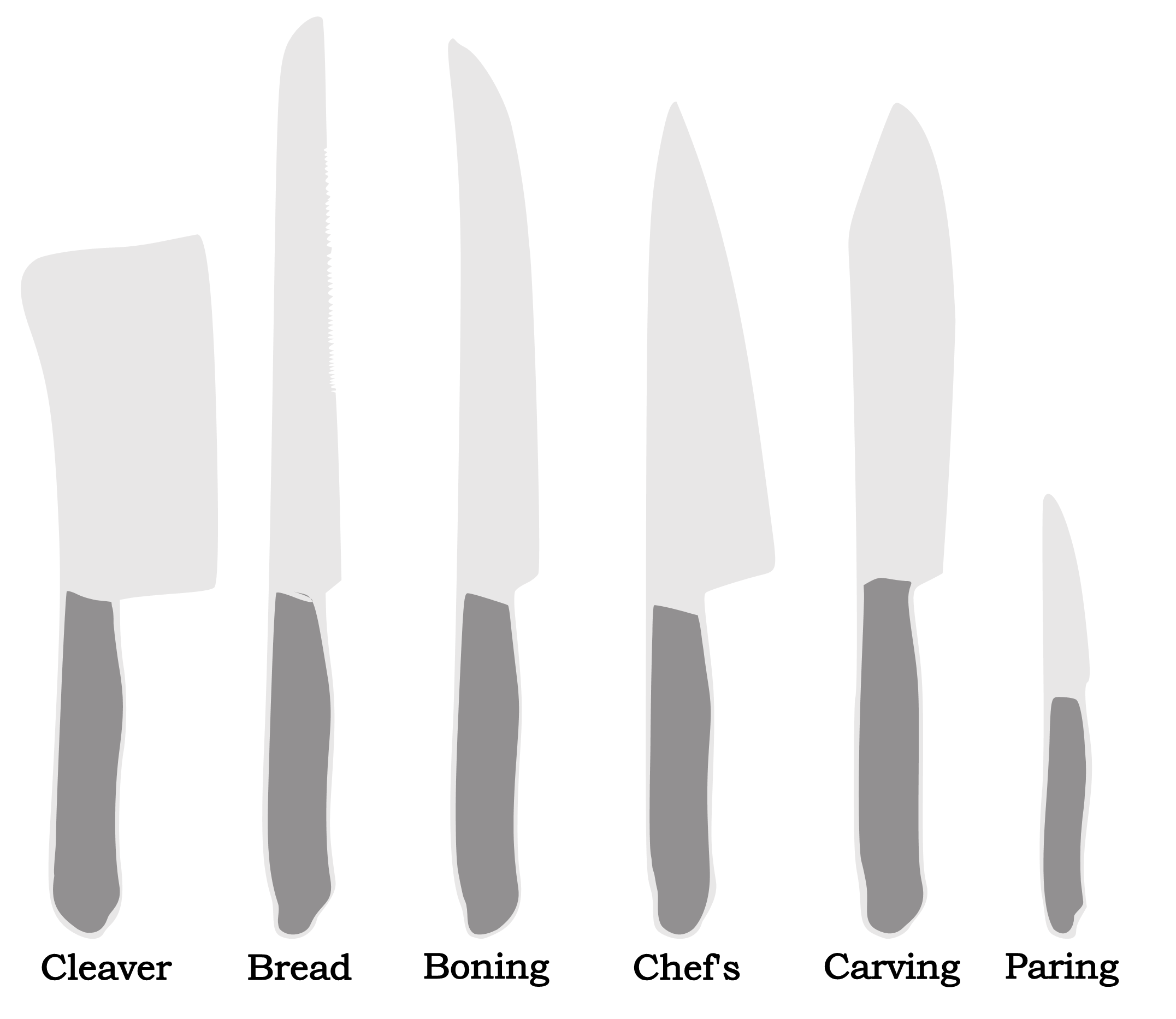
General purpose kitchen knives:
We believe that most cooks can get by with two or three general purpose knives and a good set of kitchen shears, as long as they are sharp! These knives will be adequate for the large majority of your needs in the kitchen.
-
Chef’s knife: If you could only have one knife in your kitchen, this is the one to have. The broad blade, which is most commonly 9-10” long, can be used for almost every task in the kitchen. Many of our customers don’t realize how versatile this knife is because they haven’t used a sharp one in ages. For instance, did you know that your chef’s knife – when properly sharpened – does a better job slicing bagels than your serrated bread knife?
-
Paring knife: If you could only have two knives in your kitchen, this is the second! There are some delicate tasks, like peeling fruits and vegetables, that the size of the chef’s knife is not well-suited for. With a much smaller blade of only 3-4”, we find ourselves reaching for the paring knife just as often as the chef’s knife.
-
Santoku knife: the Santoku knife is a Japanese version of the chef’s knife, with some subtle differences in blade length (typically shorter), width (typically narrower), and geometry (typically flatter on the bottom). As such, we recommend it as an alternative to the chef’s knife, especially for cook’s with smaller hands or those who appreciate the added control from a slightly smaller knife.
-
Utility knife: a utility knife occupies that space in between the chef’s knife and the paring knife, with a blade that is typically 5-6” long and similar geometry. It’s also a multi-tasker, as it can be used for a variety of jobs in the kitchen. If you have a sharp chef’s knife and a sharp paring knife, we believe you can do without this one.
-
Kitchen shears: not technically a knife, but kitchen shears or scissors are an important workhorse in your kitchen. Sometimes it can be difficult to cut something tough that won’t lie flat on a cutting board because a knife needs resistance. But the opposing blades on your kitchen shears allow you to get into a variety of awkward spots. We also find ourselves reaching for kitchen shears to open or break down packaging that passes through our kitchen.
Specialty Knives:
These knives are designed for specific cutting tasks, and most cooks won’t need all of them. If you do a lot of a specific type of cooking, or have plenty of space in a larger kitchen, you may appreciate the advantages of a specialty knife for certain tasks.
-
Bread knife: with a serrated blade at least 8” long, this knife is ideal for cutting bread without pushing down on it and squishing it. This is because the serrated blade is designed to saw through the food rather than cut it. Knives with serrated blades don’t need to be sharpened nearly as frequently.
-
Carving knife: this knife is used to carve large pieces of meat like fowl and roasts. The long blade is shorter in height than a chef’s knife, and often has scallops on the side to help release the food from the blade.
-
Boning knife: a boning knife has a thinner blade, typically 5-6” long, that allows you to work in the tight spaces required to separate meat from bone.
-
Fillet knife: similar to the boning knife in shape and function, but with an even thinner and more flexible blade. This knife is ideal for fish and other delicate meats that don’t require the stiffness of a boning knife.
-
Cleaver: with it’s distinctive look, the cleaver’s tall, heavy blade is easy to identify. Used for chopping through meat, bones, and other hard material like gourds, the cleaver is all business. Unless you are frequently breaking down large animal carcasses or making your own pumpkin puree, this one will probably stay in your drawer for long stretches.
-
Steak knives: the only knife on our list designed to be used at the table rather than in the kitchen, steak knives are part of the place setting when serving something that your regular silverware just can’t handle. Steak knives can have serrated or regular blades and typically come in a set.