
Types of Steel
Without a degree in metallurgy, the different types of steel used to make kitchen knives can feel overwhelming for the average consumer. Here we attempt to cut through some of the confusion with a high level overview of your options for blade material when choosing a knife.
First, let’s define some of the most important characteristics for knife blades:
Cost
Knife steel comes in a wide variety of price points, significantly affecting the overall cost of the knife! Some steel alloys are propriety blends made by a single manufacturer. Others are widely available and inexpensive.
Hardness
Hardness measures the blade’s resistance to indentation from a hard material. The most common scale used for kitchen knives is the Rockwell “C” scale, abbreviated as HRC. Relatively hard steels found in kitchen knives have HRC scores in the high 50s and 60s, with softer steel measuring in the low 50s. Harder steel is likely to stay sharp longer and can take a more acute angle, but is harder to sharpen and more brittle.
Brittleness
This is the blade’s tendency to chip rather than bend. In general, harder steels are more likely to become dull from chipping of the cutting edge, while softer, less brittle steel is more likely to dull from rounding at the cutting edge. So while harder steels stay sharp longer, they are also more prone to significate damage like chipping when they encounter a hard object.
Ease of sharpening
Blades with soft steel are easier to hone and sharpen than blades with hard steel. Some blades are so hard that they require specialized grinding tools or materials. Because hard steel is more likely to chip, it is also more likely to need intensive work to grind away metal and establish a new cutting edge.
Corrosion resistance
Because iron is the most common element found in steel, blades are vulnerable to rust. The addition and amounts of other elements like carbon, chromium, and manganese can significantly impact the overall resistance to corrosion.
Stainless Steel
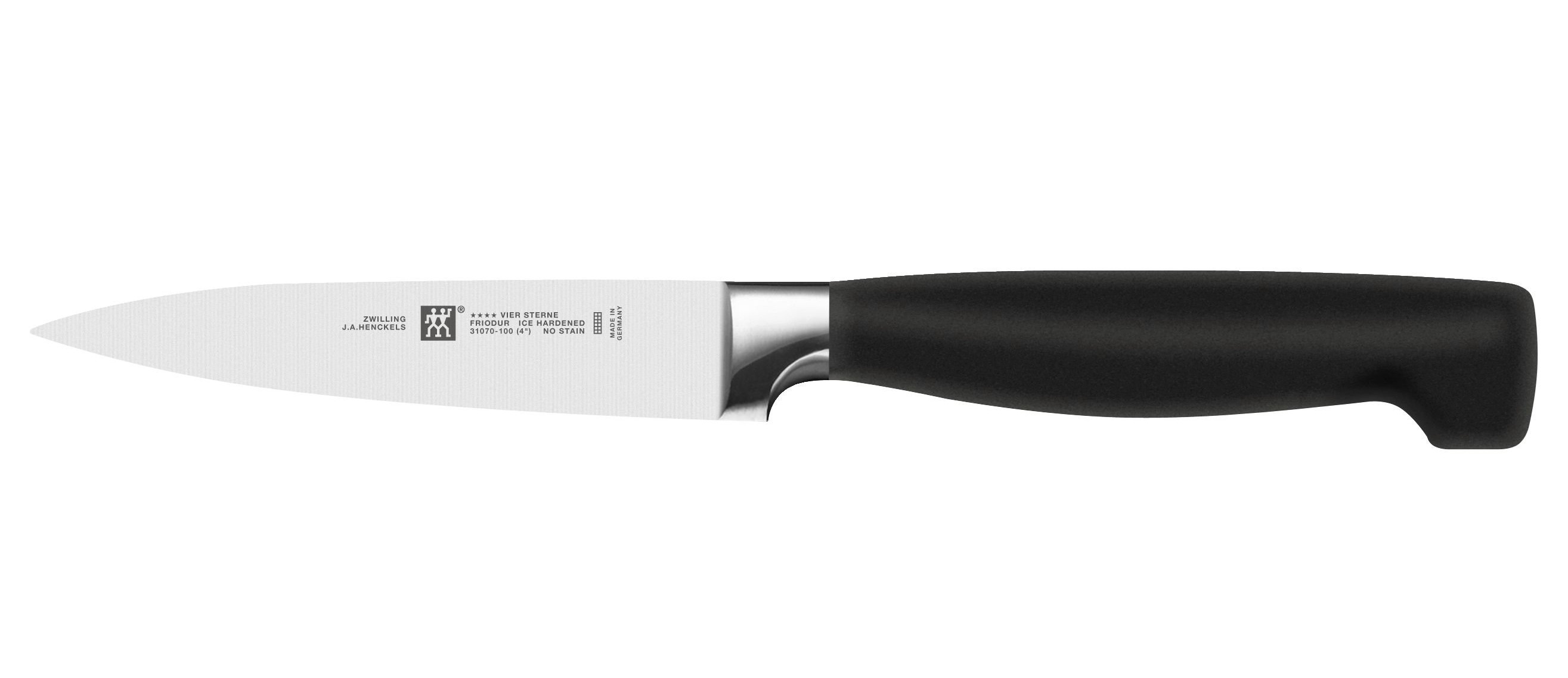
Stainless steel is the most common knife blade material and comes in a huge variety of alloys and price points. Steel is considered stainless if it has at least 10% chromium content. As the name implies, stainless steel stains “less” than regular steel, but it is not completely immune to corrosion. For most cooks, stainless is the best option since kitchen knives are constantly exposed to moisture.
Stainless steel knife blades can be made from soft steel that is dulls easily and is easy to sharpen, from hard steel that stays sharp longer but is brittle and hard to sharpen, and everything in between. In general, Japanese knives are made from harder, more brittle steel, whereas Western (often called German) knives are made from softer steel that is less likely to chip and easier to sharpen.
Carbon Steel
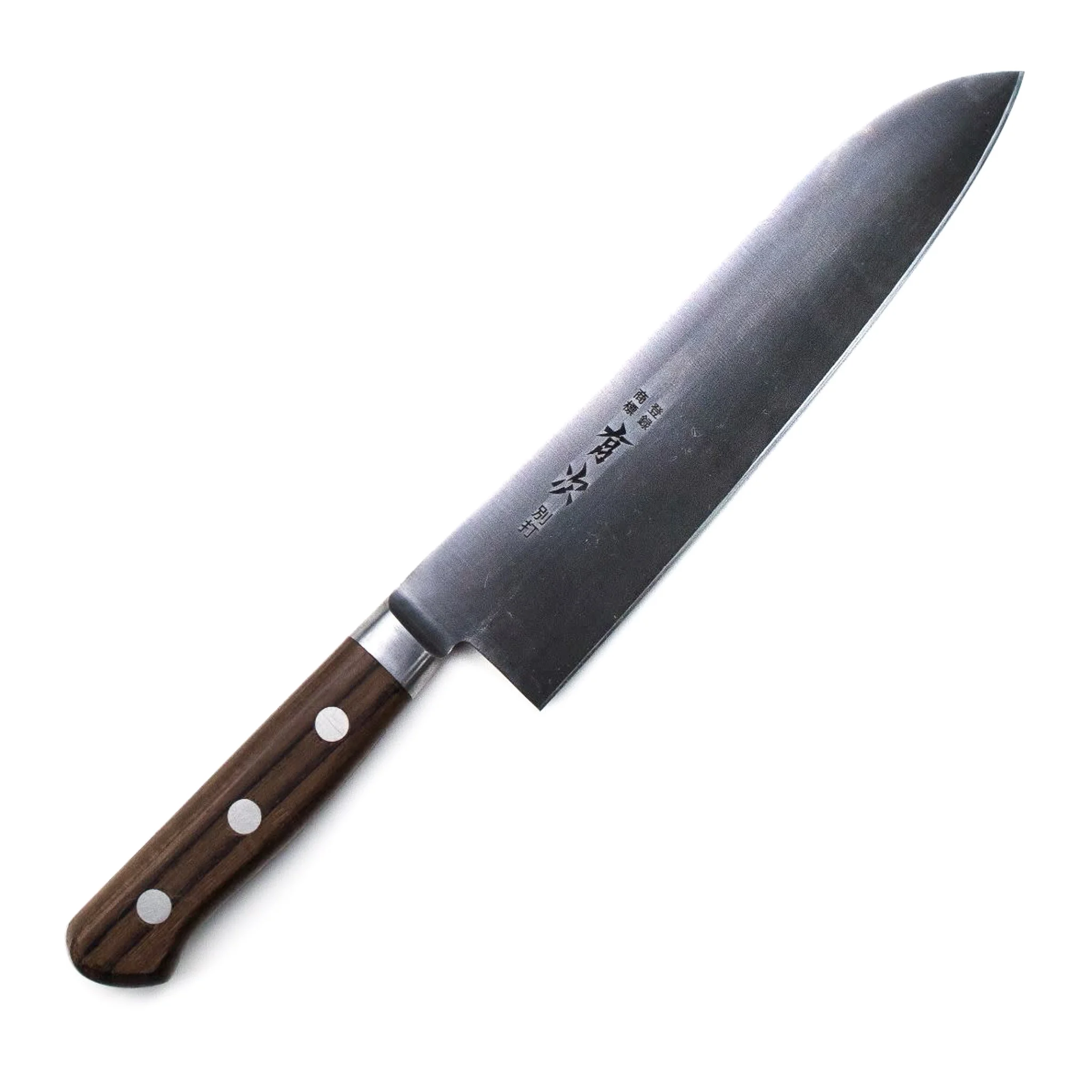
Carbon steel has a significantly higher ratio of carbon to iron than found in stainless steel. High carbon steels can be very hard (HRC over 60), can get very sharp, and can stay sharp for a long time when properly cared for. However, they can rust easily, are more prone to chipping, and require much more maintenance than stainless steel. Carbon steel is most often found in high-end Japanese knives - particularly sushi knives that are never used for cutting through or around bone. Some people love these knives for the patina that they will develop over time.
Damascus Steel
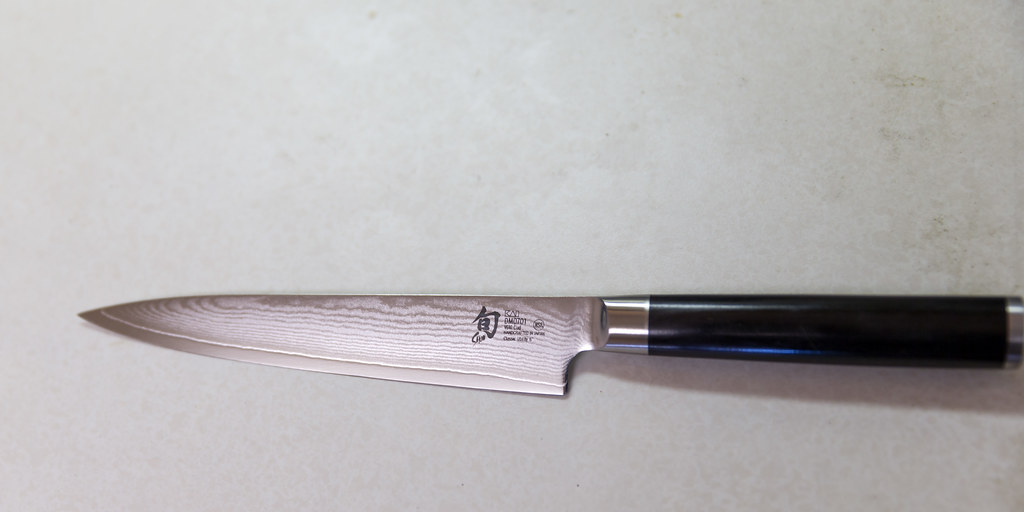
The unique look of true Damascus steel comes from a manufacturing process in which multiple types of steel are forged together. The knife is then dipped in an acid that removes one type of steel more than the other, creating a wavy pattern on the blade. Damascus knives aren’t a different type of steel so much as a different manufacturing process, so they can have the qualities of stainless steel or high carbon steel depending on what they were made from. Many people are drawn to these knives for their unique look.
As Damascus steel has become more popular, the market has been flooded with look-alike Damascus knives. Available at much cheaper price points than true Damascus steel, these knives have a surface treatment that mimics the look of true Damascus and makes possible a larger variety of patterns.
Ceramic
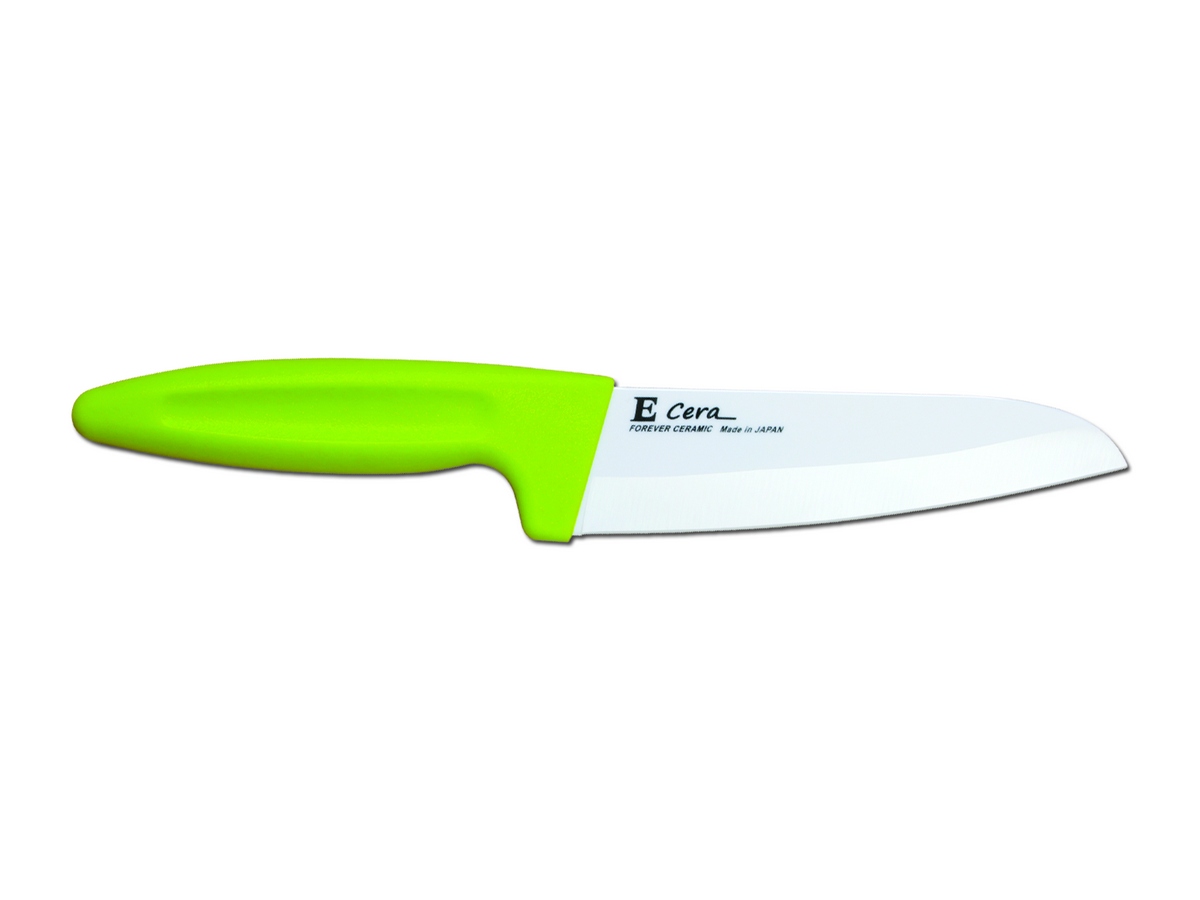
Ceramic knives aren’t made from steel at all. Rather, these blades are made from zirconium dioxide, known as zirconia. Ceramic knives have some very appealing qualities: they are very hard, very sharp when new, tend to stay sharp longer than stainless or high carbon steel, and are relatively inexpensive. With all that going for them, why do we bother with anything else?
Well, ceramic knives has a number of drawbacks: they are very brittle, hard to sharpen, and they lack the heft of a traditional knife. Ceramic knives are much more likely to chip or break when encountering a hard object like a bone, a stone countertop, or if they are dropped on the floor. If they do become chipped or dull, sharpening them is usually beyond the capabilities of a home chef because they require specialized diamond stones. And many people find them too light to be effective for the chopping tasks that heavier chef’s or santoku knives excel at.
Ceramic knives make good paring knives. Wicked sharp and lightweight, you’ll enjoy using them for fine cutting tasks done in your hand - like peeling fruit - where you are unlikely to encounter bones. The small paring knives are cheap enough that it usually makes more sense to treat them as disposable when they get dull rather than have them professionally sharpened.
In conclusion
If you’ve read this far, you may be wondering, “so which steel is best for me?”. We won’t even attempt to answer that question, other than to note that, in our opinion, the best knife is the one that you keep sharp. We recommend that people spend at least as much time figuring out how you are going to keep a knife sharp as you do deciding which knife to purchase. We’d rather use cheap knives with a well-maintained edge than fancy, beautiful, and/or expensive knives that have become dull.